One-off problem-solving
A single stuck place. You send what’s going on, I read it closely, and I give you a written take that helps you move. No ongoing relationship, no commitment — just a clear read when you need one.
I spent twenty years as a cardiothoracic surgeon. Then I lost it all and rebuilt. Now I coach surgeons and physician leaders — in the room, not from a stage.

That feeling is a knock, and mine built for years before I heard it. Chronic pain from a wrecked spine. A life running in too many directions. The slow drift from my own wife and kids. And the narcotics I’d started taking for my back, sitting right in the middle of all of it. Then it came down. Hazelden. The end of the OR. A rebuild from the studs.
Yours might not look like that. A divorce. A diagnosis. The morning you couldn’t get out of bed — or didn’t want to. The day you finally said it out loud: I can’t do this anymore. Different shape. Same thing — a wake-up.
The thing that nearly took me apart is the thing that woke me up.
It wasn’t the end of the story. It’s where the real one starts.
From the outside I had everything the straight path promises. A house on the creek in Minneapolis. A beautiful wife. Six healthy, vibrant kids. More money than I’d grown up imagining. And I was fucking miserable — and then guilty for being miserable, because who feels hollow sitting in the middle of all that?
It took me years to understand it wasn’t a character flaw. I’d held up my end of a deal: work hard, climb, don’t complain, and the fulfillment will come. I did everything right. The deal just doesn’t pay out.
So I stopped waiting for it to. There’s a name for people who quit narrating from the stage and go build, lose, and rebuild in the open: not thought leaders — thought doers. I’m one. Everything here — the coaching, the circles, the writing — comes out of work I actually did and damage I actually caused and repaired, not a framework I read about. I use frameworks. I just don’t hide behind them.
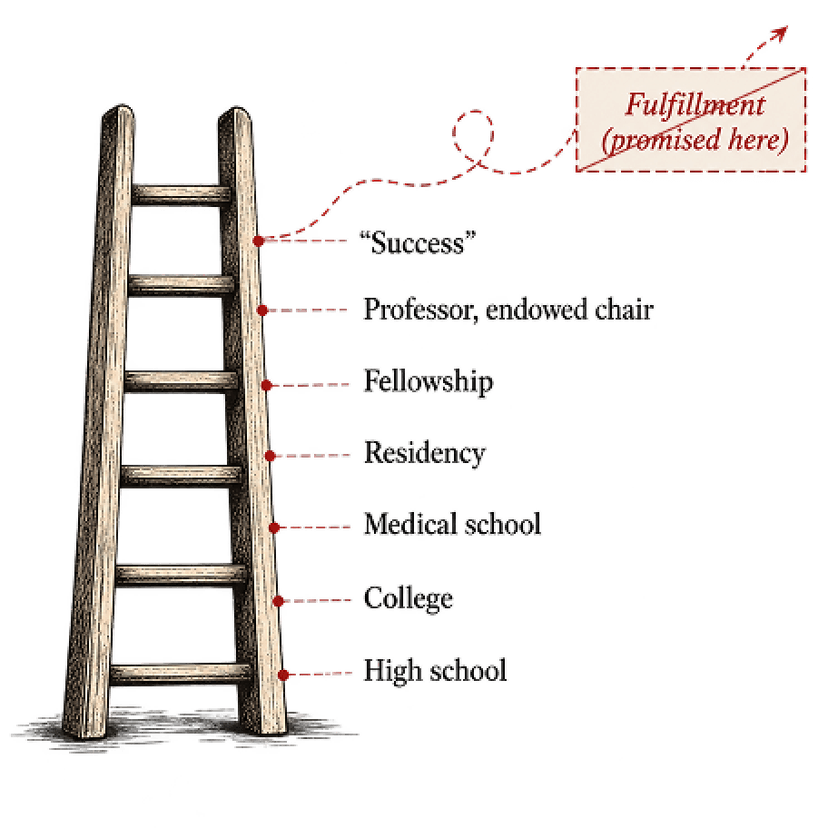
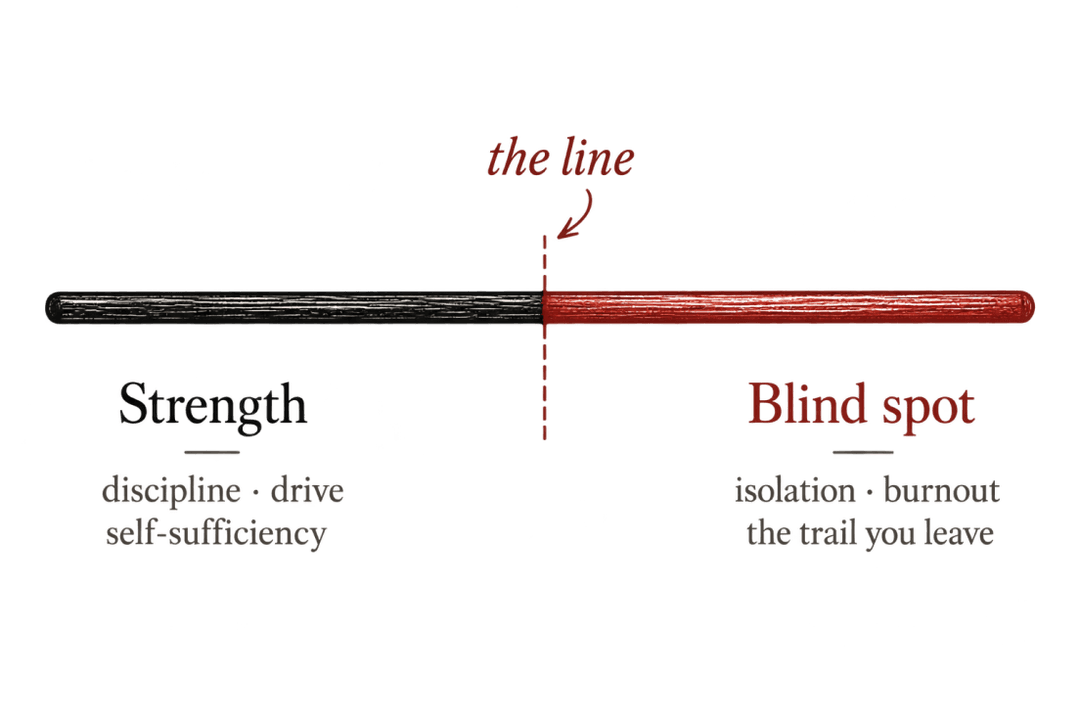
The cruel part is that the things taking you apart are your strengths. The discipline. The self-sufficiency. Be strong. Fix everything. The exact habits that made you a surgeon, run a few degrees too far, and they curdle into something else: the Groundhog Day of a calendar you resent, the quiet angst, the slow numbing out.
And underneath all of it, the one almost nobody says out loud — how alone you are. You become the person everyone leans on and the person no one checks on. In all my years doing this work, I have never met a surgeon who wasn’t carrying it, and never met one who’d said it to anyone.
Just because you’re great at something doesn’t mean you love doing it. Nobody trained you for that sentence.
Now I work with surgeons and leaders who have every marker of success and are quietly done pretending it’s enough. The work is plain and hands-on — one-on-one and in small groups: what do you actually want, what’s draining you, where are you in your own way, and how do you build a life that feels like yours instead of one that just looks right.
A single stuck place. You send what’s going on, I read it closely, and I give you a written take that helps you move. No ongoing relationship, no commitment — just a clear read when you need one.
Steady, honest work, as often as it’s useful and no more. No script, no blowing up your life. Subtle shifts that compound.
The answer to how alone this work makes you. Small groups of surgeons, strict confidentiality — the one place you say the quiet part out loud and find out you’re not the only one.
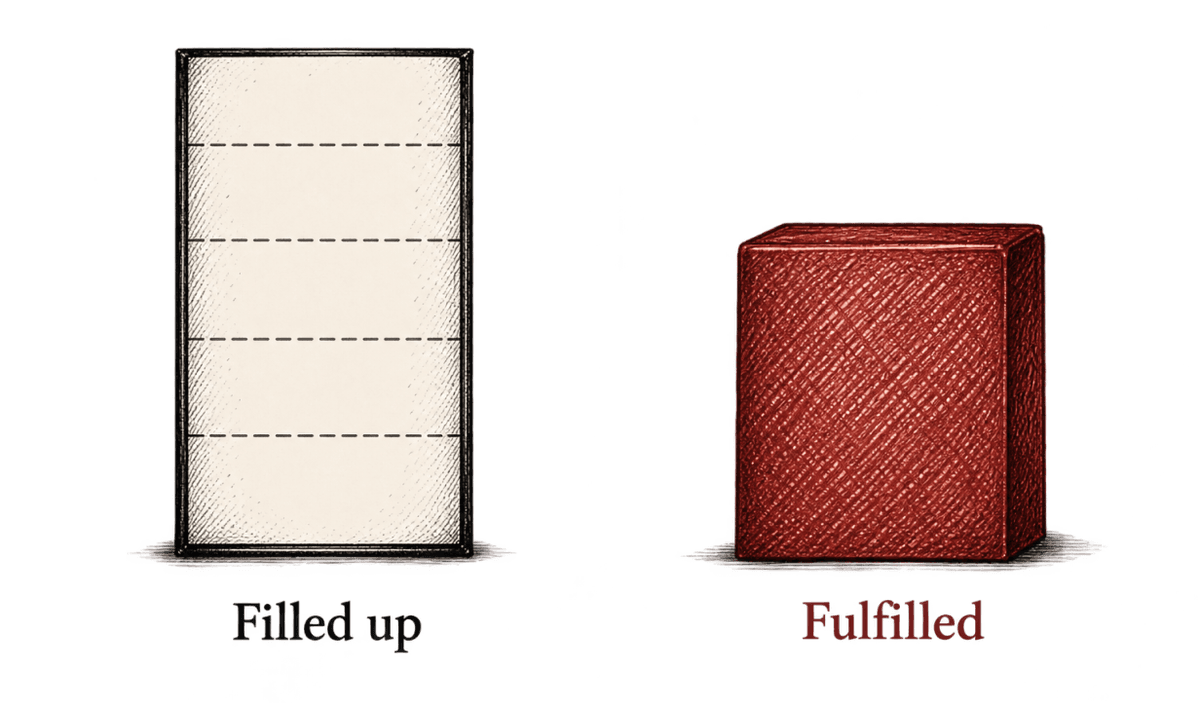
A filled-up life and a fulfilled life are not the same life, and the path that delivers the first will never, on its own, deliver the second. Fulfillment is what you feel when you’re actually developing what’s in you — not when you’ve collected one more thing that looks good from outside.
We teach surgeons how to operate. We never teach them how to live. That’s my work.
“He knows our environment better than any executive coach because he has walked the walk.”
“I’ve been part of a surgeon’s group Mike has run for over four years. It’s had a major impact on my life — at home with my wife and children, and at work.”
“He does not soft-sell his assessment of a situation. His vulnerability creates an environment for honest, deep introspection.”
“It felt like a wellness lecture — without the feeling of being lectured at.”
I write One Human, Thinking Out Loud, where I show the work in real time — including the parts that don’t go well. And in the Journal of Thoracic and Cardiovascular Surgery, I published Blind Spots in Surgical Leadership — a piece that opens by quoting my own 360 review: “He’s like an abusive boyfriend who you absolutely adore, but who you can never be sure won’t slap you.”
I don’t write about leadership from a safe distance. I write from the trail I left before I learned better.
You don’t have to keep performing a life you’ve outgrown.